

PARISH HISTORY

- 1953, the first Catholic Mass in Siler City, NC was celebrated by Fr Paul J. Byron in the Fall at the home of Mrs. Charles Ellis, a gracious Baptist relative of Rudy and Katherine Dudek. It was from this humble beginning that a small group of Catholics launched what would become St. Julia Parish.
- The first Catholic church in Chatham County was located on West Third Street in Siler City, NC. It was to be known as St Vincent de Paul before being changed to St Julia’s. This site was acquired by the Diocese of Raleigh in four (4) separate transactions as the result of generous gifts from a number of parishioners.
- 1961, the church was consecrated in October by then Bishop Vincent S. Waters of Raleigh. At that time, St Julia’s was a mission church covering all of Chatham County and operated without a full-time pastor. During that time, St Julia’s was privileged to be served by priests from St Joseph’s in Asheboro, St Stephens in Sanford, St Michael the Archangel in Cary, the Newman Center in Chapel Hill and Blessed Sacrament in Burlington.
- 1972, with the establishment of the Diocese of Charlotte, St Julia’s became a mission church of the Diocese of Raleigh and was at various times attached to St Stephen, St Michael the Archangel, Newman Center at the University of Chapel Hill, and Blessed Sacrament.
- 1988, the Conventual Franciscan Friars took over administration of Blessed Sacrament, and by extension St Julia’s.
- 1989, Fr. Hillary Micketinac introduced a weekly Hispanic Mass establishing St Julia’s as a bilingual, English and Hispanic, community.
- 1990, the Diocese of Raleigh hired the bilingual Sister Anita Gutierrez, SSpS., as the bilingual Pastoral Administrator of St Julia’s. She along with Fr Priests from Blessed Sacrament would administer to the growing number of Catholics who call Chatham County home.
- 1996, St Julia’s parishioners recognized the need to expand the church capacity. Visiting Priests could not conduct more than three (3) Masses on Sunday and each overflowed the church. The decision to relocate was sealed when Agnes and Walter Bunton, church members for more than three (3) decades, generously offered approximately two (2) acres of land suitable for building a new church just east of Siler City off Highway 64. About this same time, the Conventional Franciscan Friars made a concerted effort to increase their service to St Julia.
- 1997, Fr Daniel Quackenbush became the fulltime pastor in October.
- 1999, the Franciscan Friars built Our Lady of Guadalupe Friary in Pittsboro, on land donated by the Schwankl family. While owned by the Conventional Franciscans, the Friary serves as the residence for the Fr Priests, currently two (2), serving St Julia.
 1994, the St Julia community recognized the inadequacy of the existing parish facilities and began discussing how to address the situation.
- 1997, A Self-Study was prepared and ultimately approved by the Diocese of Raleigh in August.
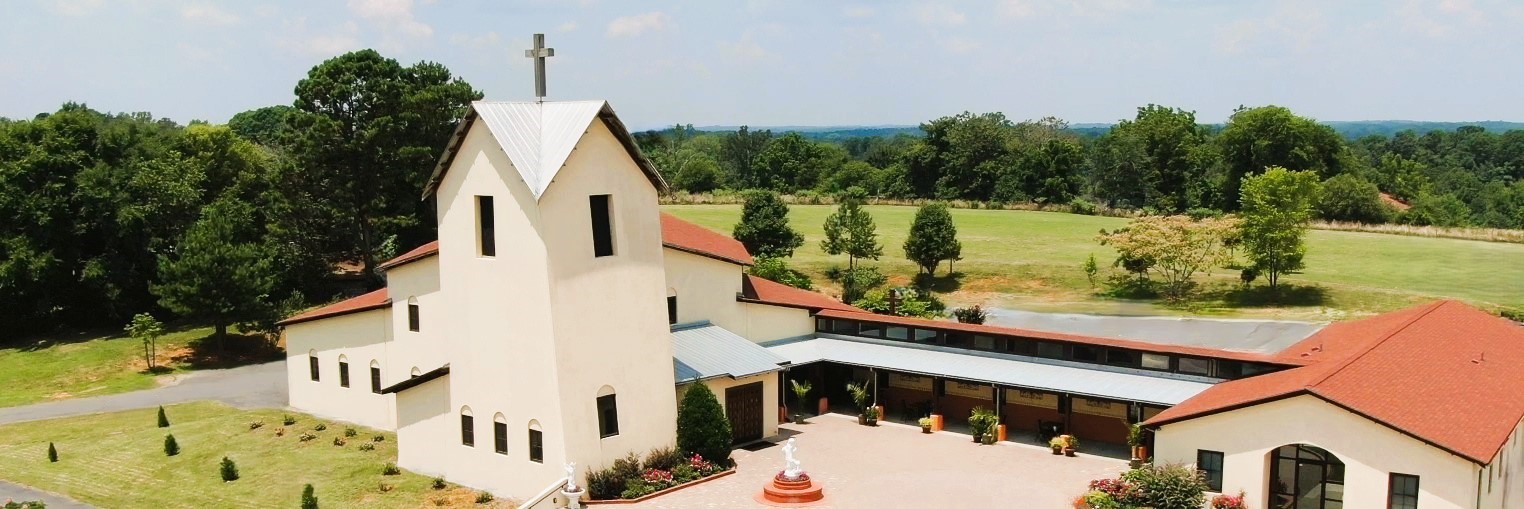
- 1999, St Julia became a parish on July 1 and one (1) year later broke ground to begin construction of the current facilities on approximately 5.5 acres of land at 210 Harold Hart Road, Siler City, NC.
- 2001, the new church was consecrated by F. Joseph Gossman, Bishop of Raleigh on December 9.
- 2017, St Julia’s purchased 10 acres surrounding the originally donated property. Thus, current Parish facilities are situated on two (2) acres of the original property and are surrounded by approximately 15.5 acres of open fields. Within the open fields, on approximately 0.25 acres, is the historical Alston family cemetery.